
Home / Services / Pianos & specialty
Planned, never muscledPiano removalists Burwood
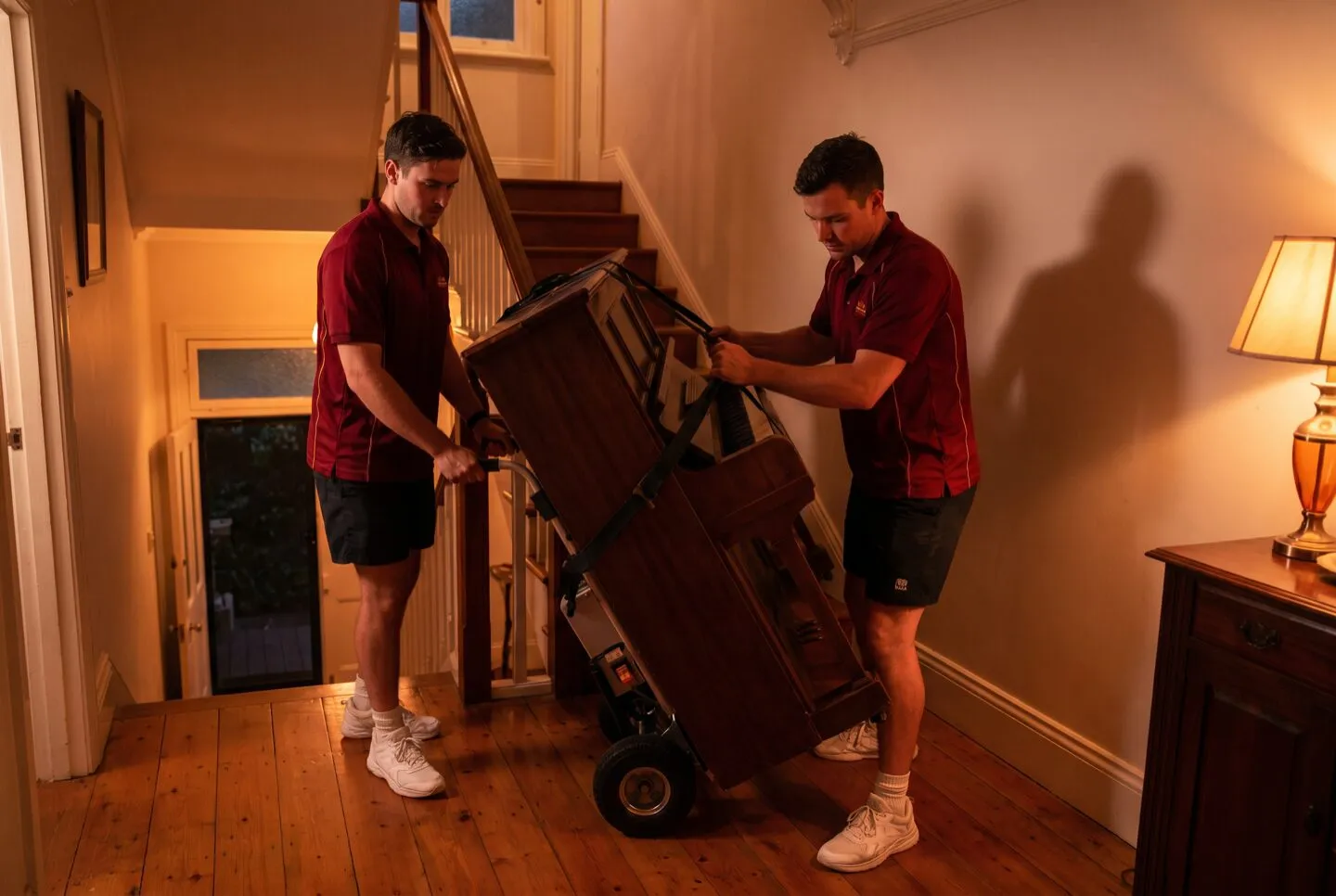
An upright piano weighs as much as three fridges and forgives nothing. The move is planned before it's lifted: the stair measured, the turn rehearsed, the trolley strapped, the landing padded. Then, and only then, it moves.
How a piano move is planned
- Which floor to which floor. The first question we ask. Ground to ground is routine; a stair or a turn gets its own plan and enough hands.
- The stair, measured. Tread depth, width, headroom and the landing. If the numbers don't work through the house, we look at the verandah, the side path or the window before anyone improvises.
- Strapped to a stair trolley. The piano rides strapped and balanced; the crew controls the descent one tread at a time.
- Landed and levelled. Into position on the felt, casters checked, nothing dragged across the boards.
Antiques, leadlight and the irreplaceable
Marble tops travel on edge, mirrors and leadlight in padded sleeves, and long case clocks come apart before they come out. If a piece is old enough to have a story, it's old enough to have its own plan, and its own pair of hands on the day.
Moving house as well? Specialty pieces fold into the house move's plan; just name them in the enquiry so the right gear is on the truck. House moves.
The same honest hours
Specialty work rides on the same hourly tiers as everything else; stairs and turns decide the crew size, and the crew size decides the rate. A single-piece job is usually the 2-mover crew at $250 an hour; a piano with a serious stair wants three pairs of hands at $350.
We'll tell you which on the callback, with the why.
Book the crew that measures first
Tell us what's moving and where. We call you back, ask the questions that matter, and give you an honest read on crew, truck and hours before anything is booked.